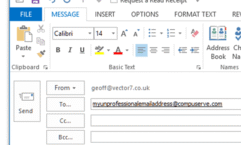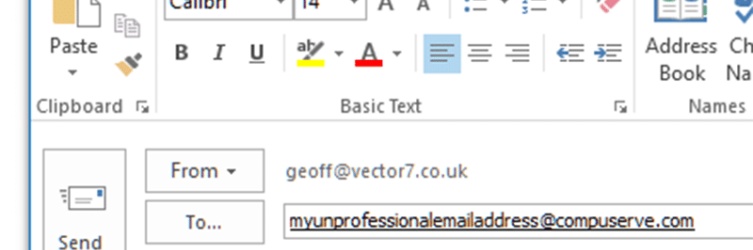
You may be telling your customers more than you think when they receive an email from you, especially if it comes from [email protected]

Emails are a vital part of most businesses in the twenty-first century. Interacting with customers as well as suppliers is done with email rather than physical letters; it’s fast, free, and convenient while retaining a written trail of what’s been said.
For years we’ve been handling people’s emails for them. For many small and medium businesses, email is something they don’t want to change — on the grounds that if it’s not broke, don’t fix it. Which is fine until time, tide, and the changing nature of technology means it does suddenly break, right in the middle of your busy season.
One of the biggest problems is using a personal email address for work. If you’re a small business or a sole trader, you probably start off using your own personal email address or your business is run through a domestic internet connection and you use the email address your ISP provides.
The problem with this is that people are getting more and more used to interpreting email addresses. They’ll notice that your email address is [email protected] or [email protected] and realise that it’s no guarantee that you are representing the business. Trust is one of the most important elements of conducting business online, people are suspicious of spending money online and they need to trust that you are who you say you are. This is especially the case if your website address is www.yourbusinessname.co.uk but your email isn’t as professional as that.
We have always offered free, basic email services within our hosting arrangements. Often, due to fears of causing problems people have requested the simplest and easiest solution for emails, and that’s a forwarder. So [email protected] forwards onto your [email protected] email address automatically. And for years this mostly worked. Admittedly when you emailed your customers back, the email didn’t come from the address they sent their mail to, but at least you got your emails.
The problem with this is that many internet account for personal use are designed to be more severe in blocking spam, and they’re starting to see forwarded email as spam. In the past few years the problems this causes has increased many times over. The problem is, because the mails are just deleted as spam, the person sending you the mail has no idea you didn’t receive their email.

From a professional standpoint; I consider this to be very bad practice on the part of the ISPs. They should be aware that many people use these personal email addresses for business and take this into consideration rather than simply disposing of emails without warning.
At this point it must be stressed that this won’t be a problem at our end, and it’s not something we will be necessarily be aware of (due to the way ISPs operate). So if you do notice disruption to your email services, please let us know.
There are solutions to avoid this, without causing interruptions to your existing email services. We do have free email services which you can use, these are ideal for anyone who just needs basic email services.
We are offering more advanced email solutions to clients, and are happy to offer support and advice in utilising third-party solutions, so whatever your email needs, please do get in touch.